Some time ago, in a gallery, I was asked a simple question:
“Why do you paint?” The answer seemed easy. However, the more I thought about it, the harder it became.
For years, I believed I painted to find a place. Perhaps to gain legitimation. Perhaps so someone would understand that which I often found difficult to explain. Maybe as a form of acceptance for that rebel, that misfit, who has always lived within me.
But that answer did not entirely convince me.
Then, another word appeared: immortality.
Not the immortality of fame or recognition. I am not so much interested in my name surviving as I am in a trace surviving. Something similar to what happened with those who left their hands imprinted in cave paintings or erected monuments that spanned centuries.
I think of those paintings made thousands of years ago. We do not know who their authors were. Their names disappeared. Yet, something of them remains there: their gesture, their presence, their sensitivity.
I understood then that what moves me about those works is not just their antiquity, but their capacity to traverse time and keep speaking.
Perhaps that is why I paint.
Not to represent the world. Not to illustrate ideas. Not to decorate spaces. I paint to leave a trace of sensitivity in time.
As I deepened this reflection, an even more important certainty appeared: what I seek to preserve is not my image or my biography. What I am trying to preserve is a way of feeling.
We live in an era that often pushes us toward speed, immediate utility, and permanent distraction. Against this, painting transforms for me into an act of resistance: a way to defend human sensitivity.
That is where Savage Untamed appears.
Over time, I understood that it is not just an artistic pseudonym. It is a symbolic figure. It is the part of me that protects what I consider essentially human: the capacity for wonder, emotion, intuition, mystery, the experience of the sacred, and the connection with that which cannot be fully explained.
Savage Untamed rebels against everything that attempts to domesticate this sensitivity. It defends it, highlights it, and transforms it into painting.
That is why I am drawn to thresholds, borders, uncertain territories, rifts, lights that appear and disappear, the last songs, and open landscapes.
They are not themes. They are symbols.
They all speak of the same place: the edge between the visible and the invisible, between the known and the unknown, between the finite and that which seems eternal.
Perhaps that is why my works do not seek to offer answers. They seek to sustain questions. They seek to generate experiences. They seek to create a space where it is possible to intuit that reality is broader than what we habitually perceive.
If someone were to ask me again today why I paint, I would probably answer:
I paint to preserve a sensitivity that I consider essentially human. I paint to leave a trace in time. I paint because I feel there is something beyond the surface of things and I need to draw closer to it.
I paint because painting is the way I found to dialogue with mystery.
And perhaps, also, because within each work persists the hope that a part of this search will survive when I am no longer here.
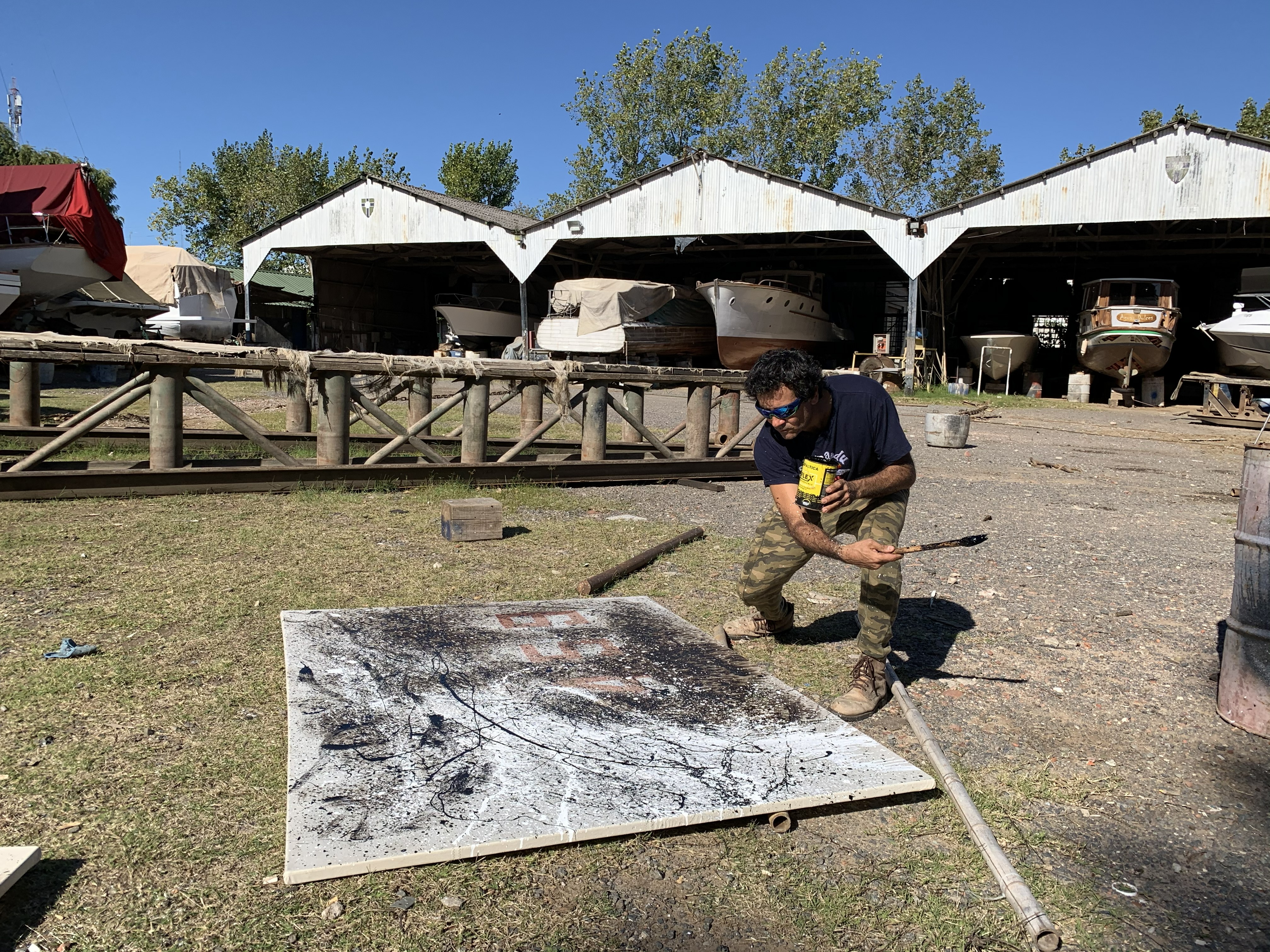 Pandemic Series, 2020. Painting as an act of survival, memory, and permanence.
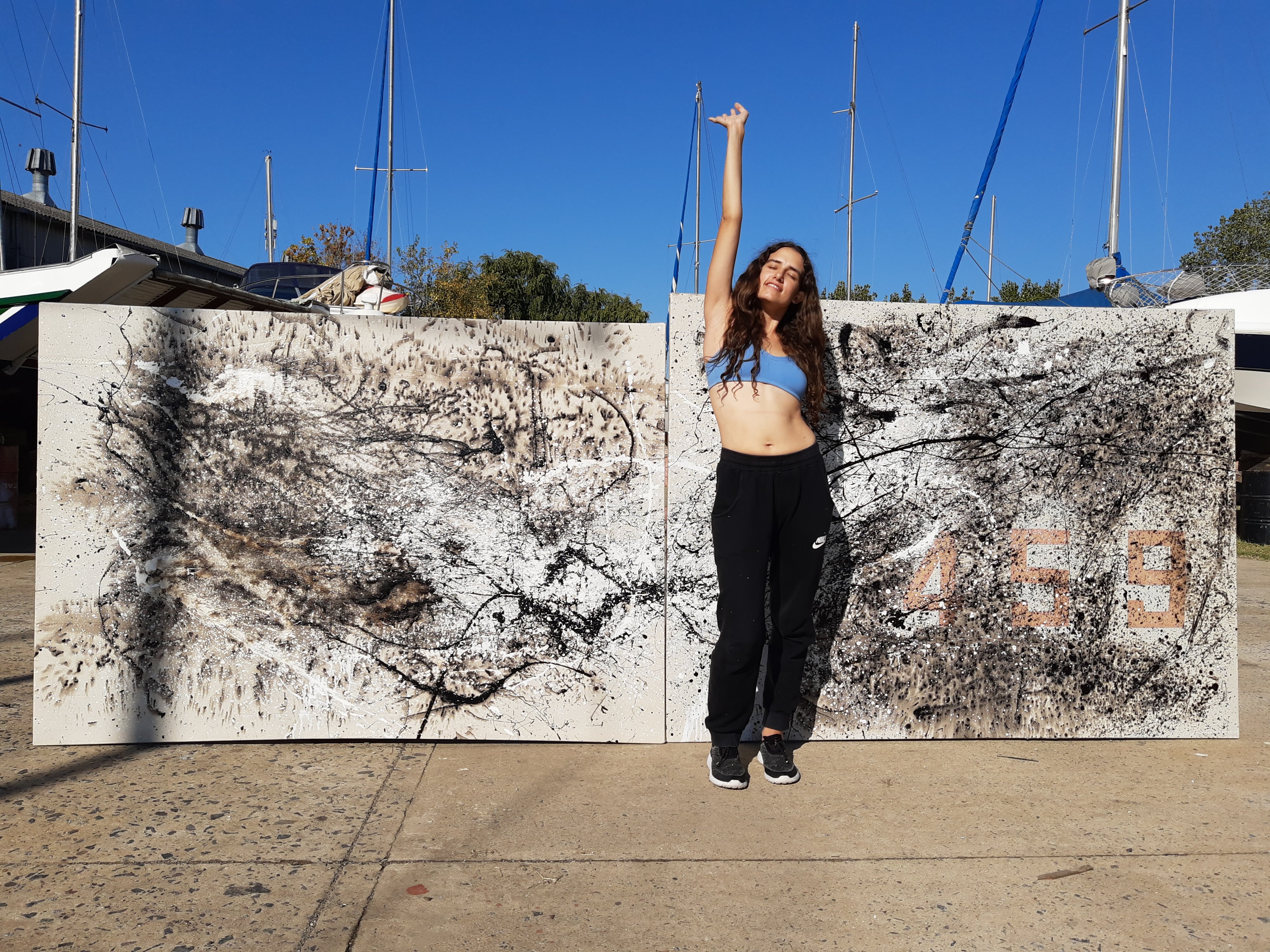 The body as a trace. Pandemic Series, 2020.
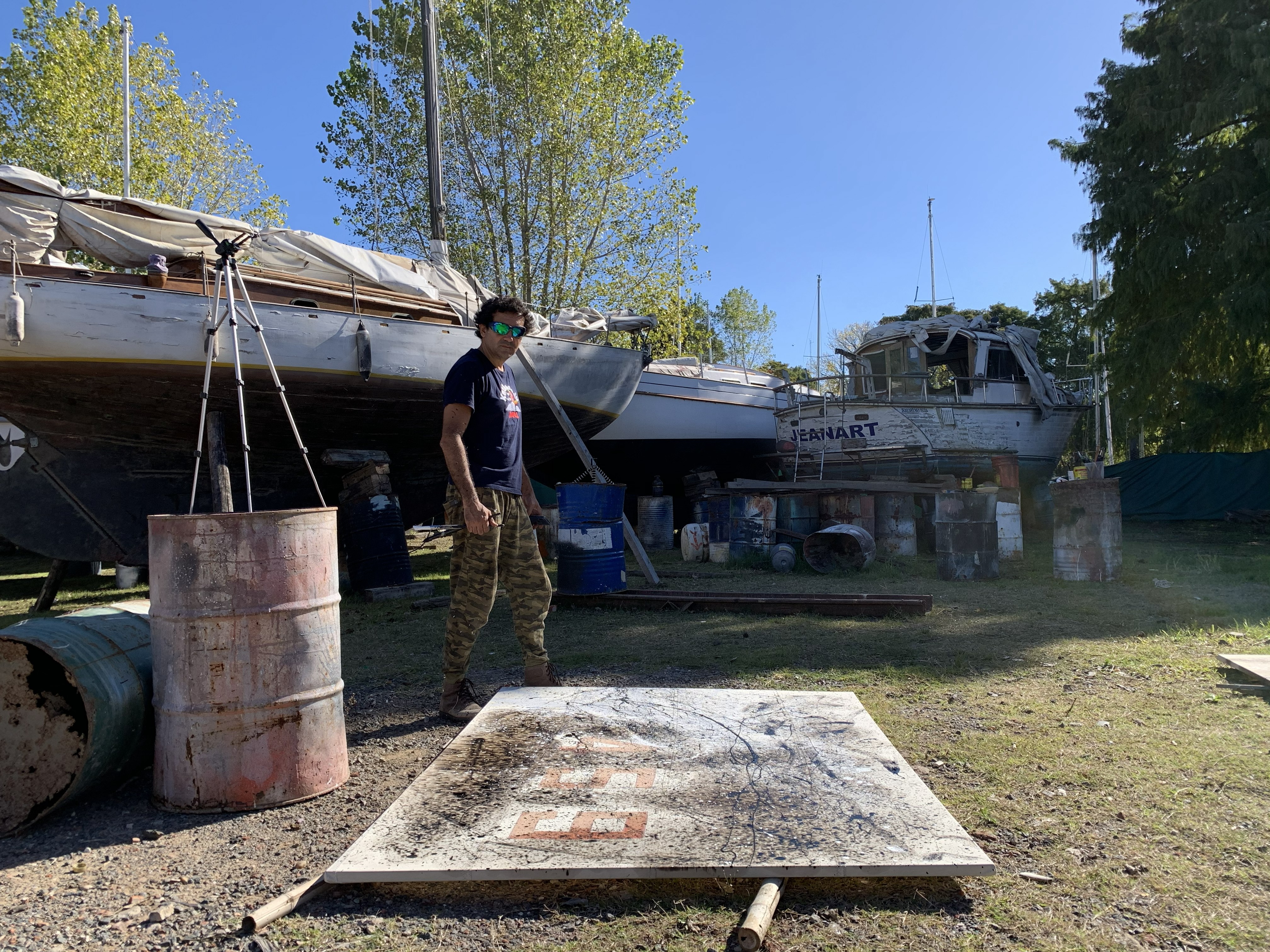 Painting to remain. Pandemic Series, 2020.